
Thanks for visiting Thoughtwrestling! If this is your first time visiting this blog, you must check out the subscription options available on the Subscribe page, including our free newsletter/mailing list full of exclusive content and other brainy goodness. Thanks for visiting!
 Is the Harry Potter book series some of the best children’s literature (or all ages literature) of all time?
Or is it stupid pop pap that was blown out of proportion by overzealous marketing and a young adult literature void?
No matter which end of the continuum your feelings lie, you can’t create something, even a best-selling book series, without a few flaws.
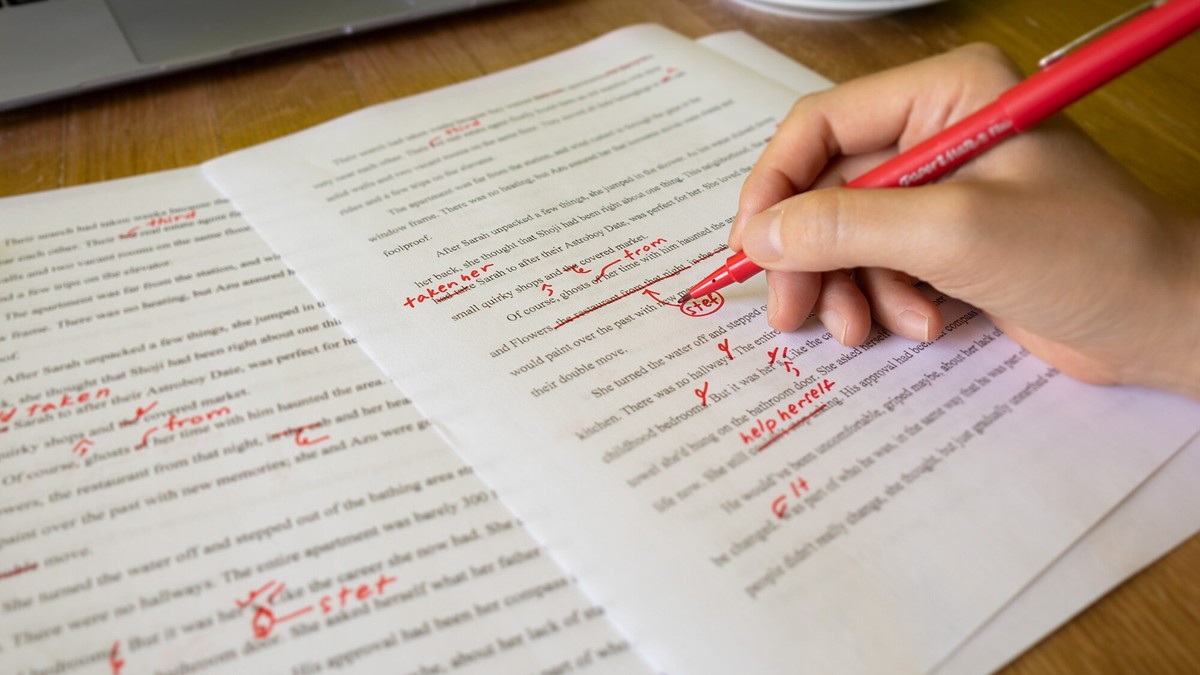
Finding and fixing as many of those flaws as possible is an important part of doing great creative work. And this is where you come in.
I used the Harry Potter series as my example because I’m rereading the last book. I found a tiny little flaw in it that I’ll share with you now. There’s one scene where two of the characters are in a room and they start kissing. All of a sudden the room’s door bangs open and a third person bursts in on them, shutting down the kissing in the blink of an eye.
Nothing wrong with that scene, right? Well, there is one little problem: no one closed the door! All we see is the two characters entering the room. They start talking and then one thing leads to another… but they didn’t shut the door!
 Now, as far as flaws go, this is tiny. It’s in the same league of O. Henry’s The Gift of the Magi, where one of the characters counts the wrong number of pennies at the beginning of the story.
You can reasonably assume that two characters in a room together, planning a bit of snogging, (as J.K. Rowling is fond of writing) would close the darn door. The scene sure doesn’t read like that, though. (And, to be fair, only one of the two characters really had an agenda… but I digress.
So what can you learn from this? Very simple: every action, no matter how small, should be significant. Cause should follow effect. Things should only happen for a reason and according to internal logic.
There’s some wisdom about playwriting which says that if there’s a gun on the wall of a room in the first scene of a play, it needs to be fired before the end of the play. That’s internal logic.
 Here’s another example, now in the non-fiction world. Stanford Smith, of Pushing Social, gave a tip to some of his readers that I’ve read elsewhere: copy your influences, word for word, as a means of getting better.
Stanford was showing his readers how to get better at writing by copying good blog posts by hand to help them learn what’s good and what’s not good. I tried the exercises on several blog posts that I admired.
Much to my surprise, I found errors in these model blog posts that I was copying. They weren’t huge problems, but they really did surprise me: missing words, mainly articles and conjunctions. In the grand scheme of things, these are minor problems. However, it did make me realize a couple of things:
- Even the best writers still make mistakes.
- If a story, article or blog post is extremely well crafted and engaging, 99% of the time the reader will miss any small errors.
So what does this mean to writers like you and me?
- Small mistakes are easy to miss.
- Large errors are far more important to fix.
You learn a lot from analyzing your favorite fiction or non-fiction writing. The best thing you can do with these discoveries is to make note of them and make sure that you don’t make the same mistakes yourself.
Pennies image by Andres; Copy image by bettyx1138
Related posts:
- The Creative Value of Editing
- How To Eliminate Creative Blocks
- Five reasons why everyone should blog
- 23 More Excellent Ways To Be Interesting (And More Creative)
- Global Manifesto Writing Month (GloManWriMo) starts today!